


Course Objective
The objective of this course is to train participants in periodic inspections, scheduled maintenance and preventive maintenance of cranes, as well as in the inspection of lifting equipment. The course covers performing periodic tests on cranes and lifting equipment and understanding the standards and intervals for inspections. This training is applicable across all industries and constitutes a fundamental requirement for occupational health and safety, as well as for the preventive and safety inspections of cranes and lifting devices.
Upon completion of the course, participants will be able to perform daily, mid-term and periodic inspections and maintenance checks. In addition to routine maintenance and inspections, safe operation (operating) and rigging procedures will also be covered.
In this course, the selection, design and ordering of overhead cranes are also taught. Learners will be able to determine the most suitable operational conditions and periodic preventive maintenance for a crane, based on the work environment, type of load handling, load class and environmental conditions.
Course Content
- Review of Level I Crane Inspection Course
- Types of overhead cranes
- Inspection of overhead cranes
- Types of mobile cranes
- Inspection of mobile cranes
- Applications and safe working ranges of various cranes
- Safety of overhead and mobile cranes
- Overview of national and international crane inspection standards: ASME B30, BS466, BS7121, DIN15018, DIN15020
- Crane Structures, Types, and Manufacturing Methods, Maintenance Intervals, Tolerances and Inspection Criteria
- Bridge Cranes (Single Girder, Double Girder, Monorail, Jib and Gantry)
- End Trucks and Wheels
- Trolley
- Hoist (Drum and Motorized Hoist)
- Wire Rope and Sheaves
- Chain and Sprocket Wheels
- Hook and Hook Block
- Drive Motors (Longitudinal, Traversing, and Rotational)
- Conductors (Longitudinal and Transverse: Festoon, Busbar)
- Electrical Panels (Main, Hoist)
- Control Systems (Pendant, Radio Control, Cabin)
- Limit Switches and Stoppers
- Rails (Transverse and Longitudinal)
- Safety Equipment
3.Inspection and maintenance visits of crane components (corrective and preventive)
- Visual and functional inspection of overhead cranes.
- Inspection and maintenance visits of electrical systems.
- Inspection and maintenance visits of mechanical systems.
- Inspection and maintenance visits of brakes and permissible tolerances.
- Inspection and maintenance visits of control switches and emergency stop devices.
- Inspection and maintenance visits of crane structure, including welds, mechanical and electrical connections.
- Camber and deflection testing of crane bridge.
- Inspection and maintenance visits of longitudinal and transverse rails, including alignment, balance and levelness.
- Inspection of motion performance under loaded and unloaded conditions.
- Inspection of motor power consumption under loaded and unloaded conditions.
- Inspection and maintenance visits of mechanical parts, including gearboxes, drums, wheels, rail wear, wire ropes and hooks.
- Preventive inspection of crane safety and protection systems
- 4. Designing Appropriate Preventive Maintenance (PM) and Proper Use of Cranes Based on Service Class and Crane Operating Conditions
- Introduction of international standards for crane design
- Crane service classes
- Designing crane operation type and working conditions according to the service class and working environment
- Designing and selecting the type and periodic maintenance of cranes in accordance with the service class and crane operating conditions
5.Checklist for Periodic Maintenance, Repair Inspections and Routine Inspections of Overhead Cranes
- Daily
- Intermediate
- Periodic
- Inspection and Safety of Lifting Equipment
- Familiarity with various types of lifting equipment and the relevant standards.
- Familiarity with the National Standard, labor regulations, and ASME standards: ASME B30.26, ASME B30.20, ASME B30.9, ASME B30.10.
- Familiarity with up-to-date international handbooks on the inspection of lifting equipment, safety principles and proper usage.
- Familiarity with design criteria, testing procedures and periodic inspections of lifting equipment.
- Familiarity with lifting terminology and rigging vocabulary.
- Knowledge of different rigging methods, safety principles and their advantages and disadvantages.
- Familiarity with supervising lifting operations and load handling.
- Familiarity with Lifting Plans and the procedures for their preparation and execution
- Familiarity with different types of slings and the proper usage of each type
- Methods and calculations for rigging with two slings
- Methods and calculations for rigging with three slings
- Methods and calculations for rigging with four slings
- Familiarity with different types of wire ropes, inspection procedures and their defects
- Familiarity with different types of belts (straps), inspection procedures and their defects
- Familiarity with different types of chains, inspection procedures and their defects
- Familiarity with different types of hooks, correct usage and periodic inspection
- Familiarity with different types of Eye Bolts and Eye Nuts, correct usage and periodic inspection
- Familiarity with different types of Turnbuckles, correct usage and periodic inspection
- Familiarity with different types of Wedge Sockets, correct usage and periodic inspection
- Familiarity with different types of Links and Rings, correct usage and periodic inspection
- Familiarity with different types of Swivels, correct usage and periodic inspection
- Familiarity with different types of Adjustable Slings, correct usage and periodic inspection
- Familiarity with different types of Hooks and Pulleys, inspection and safe application
- Familiarity with different types of Plate Clamps, inspection and safe application
- Familiarization with Types of Beam Clamps, Their Inspection and Safe Usage
- Familiarization with Types of Magnet Lifters, Their Inspection and Safe Usage
- Familiarization with Types of Vacuum Lifters, Their Inspection and Safe Usage
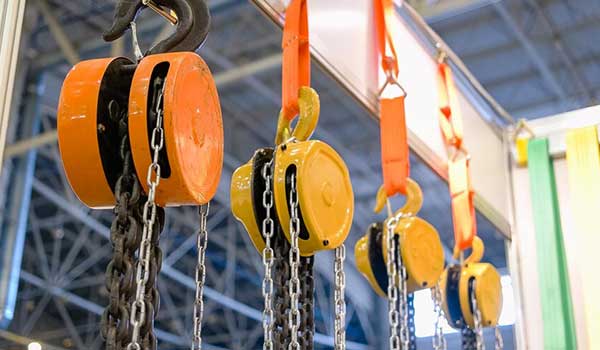
- Familiarization with Other Manual Lifting Devices (Pull Lifts, Ratchets, Chain Blocks, Hooks, etc.), Their Inspection and Safe Usage
- Familiarization with Types of Manual Pulling Devices, Their Inspection and Safe Usage
- Familiarity with types of lifting accessories, inspection procedures and safe usage.
- Calculation of weight, center of gravity and proper methods for lifting objects.
- Principles of safe lifting and unloading operations.
- Definition of hazard zones and vulnerable positions.
- Introduction to risk assessment and hazard anticipation in lifting operations.
- Methods for securing loads safely and supervising lifting operations according to the Lifting Plan.
- Daily and periodic inspections of lifting equipment.
- Standard hand signals for lifting operations and establishing safe communication with the operator and lifting management.
Who is eligible to participate in the Level 2 Crane Inspection Course?
The Level 2 In-Service Crane and Lifting Equipment Inspection course is suitable for a wide range of individuals who work with cranes and lifting equipment, including inspectors, maintenance technicians, engineers and safety professionals. This course is also appropriate for those interested in pursuing a career in crane and lifting equipment inspection.
Benefits of participating in the course
- Improved Safety: This course equips participants with the knowledge and skills necessary to identify potential safety hazards associated with cranes and lifting equipment. This contributes to reducing the risk of accidents and injuries in the workplace.
- Regulatory and Standards Compliance: This course provides participants with a comprehensive understanding of the relevant regulations and standards governing crane and lifting equipment inspections. This ensures adherence to these requirements and helps prevent costly penalties.
- Enhancing Student Skills: This course provides the knowledge and skills necessary to conduct thorough inspections of lifting equipment, thereby contributing to the enhancement of students’ professional competencies.
- Career Advancement: By completing this course, participants acquire the skills and certifications required for career progression in the field of crane and lifting equipment inspection.
- Cost Savings: This course can help identify potential defects and damages in cranes and lifting equipment at an early stage, thereby reducing maintenance and repair costs and extending the lifespan of the equipment.
Why TÜV Academy Iran-Germany?
-
Over 20 years of experience in delivering specialized and management training courses
-
Collaboration with more than 2,100 organizations and training over 210,000 individuals
-
Issuance of recognized and reputable certificates
-
Practical, hands-on training delivered by leading instructors
-
Using modern training methods to enhance knowledge and skills
Reviews
Average Rating
Detailed Rating
You must be logged in to post a review.
Price



Reviews
There are no reviews yet.